

Originally published on September, 2019 on Project 40 Collective’s Blog.
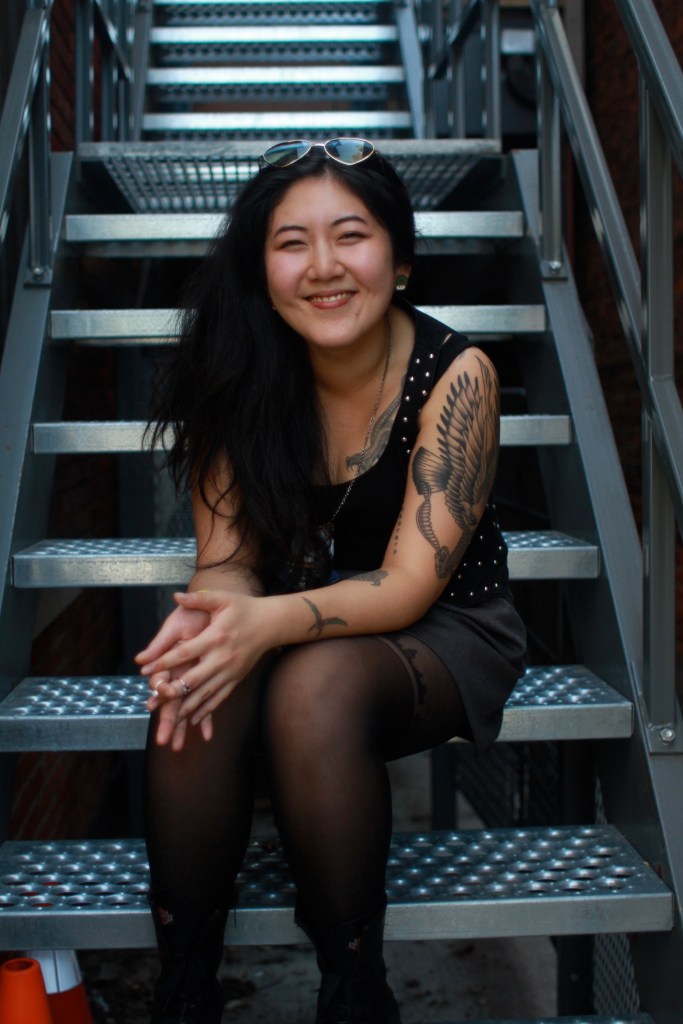
Tell us about your creative practice. How did you get involved in community work and education?
It was a winding road. I have always felt full of creative energy. When I was younger, my dream was to become a fashion designer. I would assign colours to my family members and describe why I thought they were that colour, why they embodied that colour. But like many people, I got swept up in academia in the pursuit of success. In my early teens my family broke apart and our financial resources disappeared, so I began working a lot. Soon, it became clear that the only way I’d make it to university – something I really wanted – was if I could land scholarships and bursaries. So I focused on getting good grades and I stifled my own creativity.
After I graduated and began to work in the nonprofit sector, I began to burn out. I was also trying to get a foothold on how I could use my academic and professional interests – demographics, diaspora, histories, social processes, institutions of power – in a creative way. Simultaneously I was working through my own internalized racism and misogyny, having conversations with other Asian-Canadians, and interrogating what I meant by ‘Canadian’, what we mean by ‘multiculturalism’. I wanted to have these conversations with other BIPOC folks who may or may not call Toronto home. So I started Stories of Ours as a response to my own questions and desires to expand upon what we mean by ‘cross-cultural dialogue’. At this point, my professional practice as a facilitator, curriculum-writer, and independent educator is inseparable from my creative practice.
The first time I participated in a Stories of Ours event, I was profoundly moved by the speakers’ bravery in sharing their stories with the audience, and by the sense of community that the space nurtured. How did the concept of this storytelling project originate? What were your initial intentions when you embarked on this storytelling project, and have they remained consistent to this day?
Thank you! Stories of Ours started as an experimental storytelling circle, focused specifically on exploring (im)migration and ideas/experiences of ‘home’. It was sparked by a realization I had that despite calling Canada home for so long, my mom saw a limited connection between herself and other groups of people. I wanted to unearth the things we share despite our differences – successes, challenges, fears, hopes, dreams. It was an experiment in cross-cultural dialogue and relationship-building. I had lofty goals of using this platform and space to push for change and feed into the spheres of citizen engagement and advocacy in Toronto, but my realities as a precariously employed young person prevented that from being fully realized.
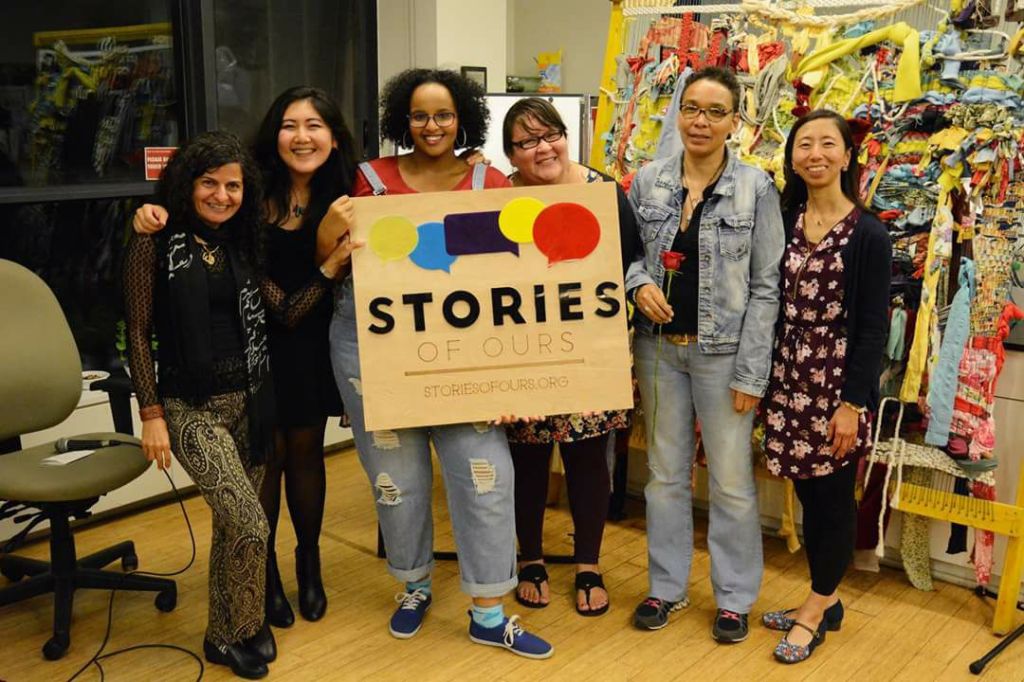
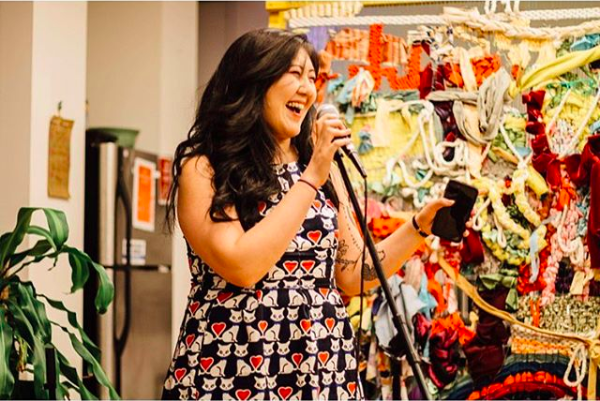
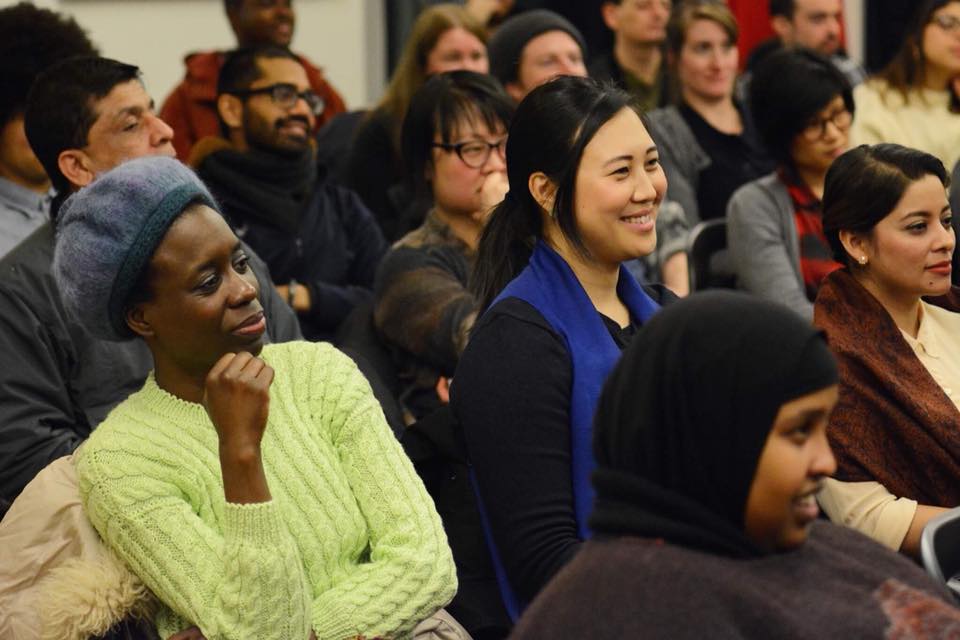
Instead, I pushed the focus of the project to grow wider. It is now a project of solidarity, of intentional community-building, a stage where people can reclaim themselves and their stories. I work closely with the people who come on to share their stories of their art (song, poetry, dance, etc) and we cultivate lasting relationships with one another. It has also become a space of healing and reflection for me and many others. It has been 5 years since the first event, and the project has evolved to experiment with our form, collaborate with other community partners, and dream of our future. But the core is the same. It’s about mutual learning and community above anything else.
In addition to Stories of Ours, you also organize other events and lead workshops and classes. How do you ensure that the spaces you create are both safe and welcoming?
It starts from the knowledge that I don’t have all of the knowledge. My role as a facilitator, event producer, whatever I might be doing, is always in service of those I am there with, so I must always put that before my own pride or whatever I think I know. That allows us then to feed into what we need to feel safe and/or welcome together.
A more precise answer may be, for instance, to create a community agreement or set some ‘ways of being’ as a group. Whatever form it takes, it usually comes down to relationship-building, which ultimately is about learning how to authentically share space with folks who are different from us.
What memorable responses have you received about your work, and have they changed the way you think about community organizing?
I am always struck by the generosity of spirit that people bring to Stories of Ours. It has really deepened my commitment to collaborative work, which is of course core to community organizing. Over the past decade I guess, since I was in my teens/early 20s, I’ve also shifted my perspective from “I can do this thing so I should do it!” to “I can do this thing… how can that be supportive?”. I don’t always have to be involved or organize or lead or even participate. Community organizing is beautiful because it’s exactly that – many people working on different things. It’s liberating.
I am always really appreciative and joyful when people meet and develop friendships through my work. I also love seeing those around me create things, produce things, question things – I attribute most of my network, friends, community, collaborators, mentors, colleagues as being responses to my work, so I am deeply grateful.
Often, community-focused endeavours entail a significant amount of labour, encompassing physical, mental, and emotional aspects. Who or what serves as inspiration for your work and motivation? How do you prioritize self-care in the midst of these commitments?
I am inspired and motivated by BIPOC womxn, clear night skies, beautiful words, our interconnectedness, possible futures, and food. Learning how to take care of and honour myself is an ever-happening journey but lately, it has been about naming my successes, celebrating my peers, seeking brief instances of solitude and silence, reading, and learning how to name when I am being restful vs. when I am being lazy.
Recently, what questions or themes have you been thinking about?
What are the things I take for granted?
How can I balance my desire to focus more on work/projects that I really want to do with my lack of financial stability or safety net?
What boundaries do I have for working with others?
Who is my work for? Who benefits from my work? How do my work and life activities uphold my privilege or marginalize others?
What’s coming up next in your creative career?
More things with food. Much more food.
Lastly, what does being “Canadian” mean to you?
It means interrogation. Canada is a contrived and built nation. What implications does that have? What does that mean about the systems we have in place and the institutions we have built up or destroyed? What is my relationship to where I live vs. where my family and ancestors are from? How do I further my commitment to decolonizing my practices?

To learn more about Cat Lamora’s work, visit their website.
To learn more about Erin’s work, visit her Instagram @erinkangster.
 Lee Mirae